Thursday, 25 April 2013

Rio Pequeno & the Electoral Cycle


O Rio Pequeno é a pequena São Paulo


Zona eleitoral é microcosmo social e eleitoral: em todas as disputas desde 2002, candidatos tiveram lá desempenho quase igual ao obtido na cidade como um todo

Daniel Bramatti  - Estadão Dados - 23 de dezembro de 2012


Kids take part in the 2012 mayoral elections in Rio Pequeno. 

Existe uma espécie de pequena São Paulo no extremo oeste da cidade. A zona eleitoral do Rio Pequeno reproduz em suas fronteiras, quase nas mesmas proporções, as divisões de raça, idade e renda dos moradores da cidade. É um microcosmo social - e, por isso mesmo, também eleitoral.

Ao espelhar o perfil social de São Paulo, o Rio Pequeno virou palco de um fenômeno. Em todas as eleições realizadas nos últimos 10 anos, os candidatos - vencedores e derrotados - tiveram votação quase idêntica na região e na cidade como um todo. A diferença máxima nos resultados foi de dois pontos percentuais - índice inferior ao da maioria das pesquisas eleitorais.

Na última disputa pela Prefeitura, no 1o. turno, o tucano José Serra teve 31% dos votos na cidade e 32% no Rio Pequeno. O petista Fernando Haddad conquistou 29% e 28%, respectivamente. Celso Russomanno (PRB) teve 22% nos dois locais. No caso de Gabriel Chalita (PMDB), a diferença foi de 1 ponto porcentual (14% e 13%). No 2o. turno, não foi muito diferente: Haddad teve 56% e 54%, e Serra, 44% e 46% (veja quadro acima).

O caso do Rio Pequeno é único. Das 58 zonas eleitorais de São Paulo, outras 4 tiveram resultados próximos ao da média da cidade neste ano (diferença de até 2 pontos percentuais), mas o mesmo não ocorreu em eleições passadas.

Correlações. O Estadão Dados detectou o fenômeno da "pequena São Paulo" ao buscar, entre todas as zonas eleitorais da cidade, aquela com o perfil social mais parecido com o da média da cidade. O objetivo era testar uma hipótese: como há correlação entre voto e indicadores de renda, idade e raça, um microcosmo social da cidade reproduziria, em menor escala, suas tendências eleitorais? A resposta é sim, não apenas em disputas municipais. Candidatos ao governo e à Presidência poderiam ter projetado seu desempenho na capital se tivessem feito pesquisas apenas no Rio Pequeno. No segundo turno de 2002, por exemplo, Luiz Inácio Lula da Silva (PT) teve 51% dos votos na região e na cidade. Serra ficou com 49%.

Na análise do Estadão Dados, que levou em conta um mapeamento social e eleitoral de São Paulo feito pelo Ibope, a zona 374 (Rio Pequeno) se destacou por ter exatamente a mesma composição etária do total dos paulistanos - 22% com até 15 anos, 8% com 65 anos ou mais e o restante na faixa intermediária. As proporções de moradores brancos e negros também são idênticas.

Se o "mix" etário e racial dos bairros pende para um lado ou para o outro, isso influencia o resultado das urnas. Em 2012, como em eleições anteriores, os habitantes de São Paulo se dividiram de acordo com padrões geográficos e sociais: o centro rico votou de um jeito, a periferia pobre de outro. O PT foi melhor onde a renda é mais baixa, onde a população é mais jovem e onde a proporção de pretos e pardos é maior. Com o PSDB aconteceu o inverso.

Diversidade. No interior do próprio Rio Pequeno essas correlações também puderam ser observadas. Lá, Haddad teve vitória folgada nas urnas instaladas no CEU Uirapuru (72% a 28% no 2o. turno), no Jardim Paulo VI. Não poderia ser um lugar mais periférico: está a cerca de 500 metros da fronteira com Taboão da Serra, um dos municípios vizinhos. As ruas estreitas dos arredores, quase sem árvores e comércio, abrigam casas geminadas e sobrados com renda média inferior a R$ 2.000 - na cidade, a média por domicílio é o dobro desse valor. A proporção de pretos e pardos chega a 57%. O perfil dos moradores se assemelha ao de Parelheiros, reduto petista na zona sul paulistana.

No outro lado do Rio Pequeno, perto da Cidade Universitária, houve outra "goleada" de 72% a 28% nas urnas instaladas na escola General Euclides Figueiredo - desta vez, com Serra na frente. As ruas próximas, na Vila São Francisco, são arborizadas e abrigam moradias de classe média e alto padrão, algumas em condomínios fechados. Um campo de golfe marca a paisagem. A renda média por domicílio supera os R$ 9 mil, e a proporção de moradores pretos e pardos é de apenas 9%. O perfil se assemelha aos dos Jardins - local onde Serra teve sua maior votação em 2012.

Mapeamento. O fato de existir um microcosmo de São Paulo não passou despercebido pelo PT. "Quando a gente sente que vai ganhar aqui na região, é sinal de que a eleição está ganha", disse Paulo Cesar Petronilho, presidente do diretório zonal do Rio Pequeno. Segundo ele, o fenômeno ocorre desde a eleição da petista Luiza Erundina, em 1988.


iMayoral election day at Rio Pequeno. Candidates' leaf-letting gone wrong on the corner of Rua Rui Amaral Lemos and Rua Valdessi Maria de Lima. 

Petronilho também vê a região como um resumo de São Paulo. "Temos áreas de perfil muito diferente, ricas para o lado do centro e pobres na periferia. Até em termos administrativos há diversidade, pois parte da zona eleitoral fica na Subprefeitura da Lapa e parte na do Butantã."

No PSDB, as informações sobre o Rio Pequeno foram recebidas com surpresa. Responsável pelo acompanhamento estatístico do desempenho do PSDB, o secretário-geral do diretório estadual do partido, César Gontijo, costuma focar mais sua atenção no que ocorre em diferentes cidades do Estado, e não em zonas específicas da capital.

Para ele, o fato de o PT ter vencido com larga margem nas áreas mais pobres - do Rio Pequeno e da cidade - é uma decorrência da má avaliação da gestão do prefeito Gilberto Kassab, aliado de Serra na eleição. "Quanto mais carentes as pessoas, mais elas são dependentes dos serviços da prefeitura", considera.

para ler a materia inteira entre em: http://www.estadao.com.br/noticias/impresso,o-rio-pequeno-e-a-pequena-sao-paulo,977027,0.htm

posters & banners of 2012 Mayoral elections in Rio Pequeno. 

Monday, 1 April 2013

Comunidade da Favela do Sape

Por puro acaso, na verdade, lendo uma mensagem deixada por Favela-do-Sapé comentando uma foto postada na pagina Rio Pequeno 1984 - é que fiquei sabendo da existência de dois blogs sobre a FAVELA DO SAPÉ, que está sofrendo uma transformação radical há mais de 2 anos já. 

Marcelo Vieira da Cruz é o blogueiro que posta muitas fotos sobre o andamento das obras que a Prefeitura está realizando lá. 

Para ficar mais informado sobre esses acontecimentos, entre nesses links abaixo:

http://comunidadesape.blogspot.com.br/

http://faveladosape.blogspot.com.br/

marcelovieiradacruz@live.com


Wednesday, 6 February 2013

Fatal car crash at Rio Pequeno in 2013.

Wagner Lucena's 1974 modified-Maverick crushed into a power post on Avenida Politécnica, Rio Pequeno on Saturday afternoon  - 3 February 2013.

Gearheads’ world has lost one of their biggest enthusiast: Wagner Lucena da Silva Leite AKA Waguinho Boró, was the victim of a terrible accident at around 17:00 on Saturday, 3 February 2013.

Wagner lost control of his car and smashed it right against a power post on Avenida Politécnica, 3545 going towards Marginal Rio Pinheiros, in front of Paiol, just three blocks away from his work-shop Funilart, on the corner of Rua Adolfino de Arruda Castanho. 

Wagner’s 1974 Maverick, had been upgraded with a modified engine, with nitrous oxided cilinders (cilindros de óxido nitroso) and a diferential self-block (diferencial auto-blocante). Read more about nitrous oxide further down.

Some say Wagner died instantly, others say he was taken to Hospital Universitário but died on arrival. Some say he was riding his Maverick at 190 kph when it 'buckled'. 

Wagner had his Funilart paintshop and workshop on Avenida Politecnica for about 10 years and was well-respected by his peers.
The post where Waguinho crashed his Maverick had already been replaced by Monday...
mourners left flowers on the spot Wagner lost his life.
a poster pasted on the post invites people to attend a 7th day Mass on Saturday, 9 February 2013 - 18:00 at Igreja de São Lucas Evangelista, Praça João Manoel Gaby Fontan, 4, Jardim Previdência. 
Wagner Lucena.


Nitrous oxide (óxido nitroso), commonly known as laughing gas, is a chemical compound with the formula N2O. It is an oxide of nitrogen.
It is also used as an oxider in rocketry an in motor racing to increase the power output of engines. At elevated temperature, nitrous oxide is a powerful oxider similar to molecular oxygen. 


Nitrous oxide and the internal combustion engine


In vehicle racing, nitrous oxide (often referred to as just 'nitrous') allows the engine to burn more fuel by providing more oxygen than air alone, resulting in a more powerful combustion. The gas itself is not flammable at a low pressure/temperature, but it delivers more oxygen than atmospheric air by breaking down at elevated temperatures. Therefore, it is often mixed with another fuel that is easier to deflagrate.

Nitrous oxide is stored as a compressed liquid; the evaporation and expansion of liquid nitrous oxide in the intake manifold causes a large drop in intake charge temperature, resulting in a denser charge, further allowing more air/fuel mixture to enter the cylinder. Nitrous oxied is sometimes injected into the intake manifold, whereas other systems directly inject right before the cylinder to increase power. 

The technique was used during WWII by Lutftwaff aircraf with the G-M1 system to boost the power output of aircraft engines.

One of the major problems of using nitrous oxide in a reciprocating engine is that it can produce enough power to damage or destroy the engine. Very large power increases are possible, and if the mechanical structure of the engine is not properly reinforced, the engine may be severely damaged or destroyed during this kind of operation. 

It is very important with nitrous oxide augmentation of internal combustion engines to maintain proper operating temperature and fuel levels to prevent 'pre-ignition', or 'detonation' (sometimes referred to as 'knock'.

Most problems that are associated with nitrous oxide augmentation do not come from mechanical failure due to the power increases. Since nitrous allows a much denser charge into the cylinder, it dramatically increases cylinder pressures. The increased pressure and temperature can cause problems such as melting the piston or valves. It may also crack or warp the piston or head and cause pre-ignition due to uneven heating.

Automotive-grade liquid nitrous oxide differs slightly from medical-grade nitrous oxide. A small amout of sulfur dioxide (SO2) is added to prevent substance abuse. 


Wednesday, 30 January 2013

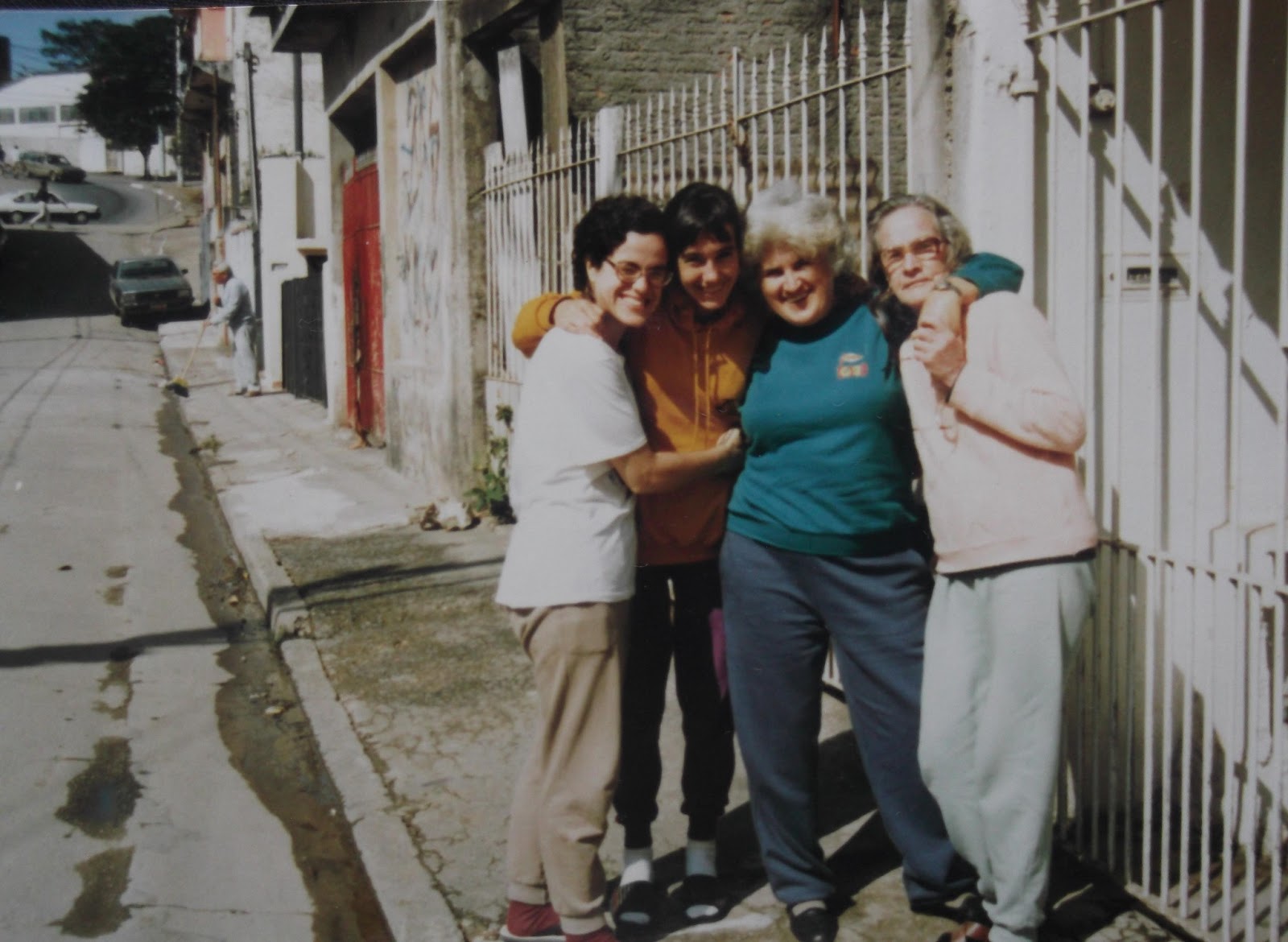
Our street in Rio Pequeno

Rute, Sandra, Ofélia & Yolanda, our Mother circa 1994. The man sweeping his foot-path is Signore Salvatore, an Italian man originally from Naples who lived with his wife Caterina 3 houses up.
This photo was taken in December 1984 on Estrada do Rio Pequeno. Some 30 years later someone has recognized the boy sitting on the kerb next to a VW's Brasilia as being Piruquinha - who used to 'guard' cars against vandalism while their owners were busy buying vegies at the street market (feira).
Photo taken circa 1979: our next door neighbours; from left to right: Ico Tobias & Djanira (husband & wife) who's holding their youngest boy Iquinho Jr.; next 2 boys don't belong in the family; Dulcelisa; Betty (holding Fabiana's hands, her sister); next lady (wearing a white is a friend of the family); Squatting at the front from left to right: Rosangela, Solange, Gilberto, Reginaldo and Agnaldo.  

Sunday, 11 November 2012

Rio Pequeno & a Cultural Policy


Vladimir Saflate, a USP professor writes about a Cultural Policy for São Paulo – for ‘Carta Capital’ a weekly magazine in 28 October 2012. Now that Workers Party's Fernando Haddad has won the mayoral elections of 2012 - the issue comes back to discussion.


Brazil considers itself a musical country. Paris has got a music school for each district. Now, tell me how many public Music Schools there are in São Paulo? None! In case a teen-ager in Parelheiros or Rio Pequeno wants to be an actor where will he turn to?

São Paulo needs as many municipal art schools as possible to offer its youth not only workshops but long-term courses in music, theatre, dance, audio-visual arts and literature.

The displaying of the Nation's cultural production shows São Paulo as a city clearly segregated socially. Most suburbs do not even have a small public library. Rio Pequeno actually do not have any public building – except CEU Butantã which is closer to Rodovia Raposo Tavares than to Rio Pequeno’s centre itself – where any public artistic activity could take place.

If you really want to read Vladimir Saflate’s article in full go to: 

http://www.cartacapital.com.br/cultura/uma-politica-cultural-para-sao-paulo/?autor=961

Monday, 22 October 2012

Rio Pequeno means Little River

Rio Pequeno is a suburb in the outskirts of São Paulo's West Side. It has been a dormitory place for the last 40 years. That means, people would work somewhere else and come here to sleep the night and go off to work the next day. That is what 'dormitory suburbia' means.

I wish I had photos of Rio Pequeno dating back to the 1960s but I only have pictures from the late 1970s onwards. 

I might be lucky and meet someone who might have older pictures... but I'm not very hopeful. Anyway, let's start blogging with the material we've got hold of now. 
My Mother & Myself circa 1978, having two football fields in the back. Half of this area has been land-filled and a public market aka 'sacolão' built in its place by the administration of Mario Covas (1983-1985) who had been appointed S.Paulo mayor during Franco Montoro's tenure as Governor (1983-1987). The football-field closer to Estrada do Rio Pequeno became what is known as 'Corinthinhas'. See the road in the back ground that climbs up the hill? It is Rua Rui Amaral Lemos. On the upper extreme left side of the picture there is a hill-side with trees: that's where condominium Parque dos Principes would be built.
Rute Darin (holding a transistor radio on her right hand) & Yolanda Darin on the same day in 1978. Vila Dalva lies on the hill-side in the background.
Rute & Yolanda at an amusement park that set up shop in Rio Pequeno. Sometimes a circus would pitch up their tent at this same lot that eventually would become Avenida Engenheiro Adolfo Graziani.  
Same vacant lot where circus and amusement parks would pitch their tent. 
Rute & Sandra posing on Rua Sebastião Mainarde. One can see the former bridge that ran on top of Rio Pequeno (Little River) on to Rua Angelina Russo linking Vila Dalva's side to Rio Pequeno itself. Further back one can see the sports-court belonging to Escola Estadual Daniel Paulo Verano Pontes.
Goats, horses and chickens used to roam free on Rio Pequeno streets in the 1970s
By the banks of Little River... literally! One can see Vila Dalva in the background.
At the end of Passagem Particular no. 14 (Rua Francisco Precioso today) there was this rickety wooden foot-bridge over Little River (Rio Pequeno) that led on to the other side - Rua Sebastião Mainarde, Vila Dalva. After mayor Paulo Salim Maluf (1993-1997) built Avenida Politécnica, most of these houses were torn down and Rio Pequeno was 'canalized' but not covered. One can still smell the stench coming out of its polluted waters today (2015).
Estrada do Rio Pequeno on the corner of Rua Francisco Precioso (former Passagem Particular n. 14) circa 1989, just across Panificadora e Confeitaria Vitapão.
Final stop of Rio Pequeno busses next to Escola Brasil-Japão circa 1989. When Luiza Erundina (Jan. 1989 to Jan. 1993) was São Paulo's mayor she passed a law which changed the bus colours according to 8 different regions: area 1 (northwest) became green; area 2 blue (north); area 3 yellow (northeast); area 4 red (east); area 5 forest-green (southeast); area 6 blue (south), area 7 wine colour (sothwest) and area 8 orange colour (west).   
a Lapa-Rio Pequeno bus turns right from Rua Angelina Russo onto Avenida do Rio Pequeno. Local busses had dark-red colour before Luiza Erundina administration (1989 to 1993).

art-work done by Marcelo 'Busovsky' Amendola show Rio Pequeno busses from 1970s & 1980s.

If you know more about the region try Wikipedia: http://pt.wikipedia.org/wiki/Rio_Pequeno_(distrito)

try this blog about Rio Pequeno: http://sampaguarupequeno.blogspot.com.br/

try this one about Favela do Sapé:  http://comunidadesape.blogspot.com.br/

and this:  http://faveladosape.blogspot.com.br/

Eearly settlers 1962 - 1963

My uncle Claudio Amorim and wife Francisca de Oliveira with their five children: Claudio André aka Claudinho, Jacinto, Claudete, Reinaldo and Claudia (next to her mother) circa 1964. They were the first members of our family to move out to Rio Pequeno in late 1961.  

Our family hail originally from Ourinhos-SP and Marília-SP. Most of us migrated to São Paulo circa 1960. Mario was the first to settle in S. Paulo; then came Claudio in 1959. Claudio & Francisca with children went to live in Vila Madalena, on Rua Iperó, 11-A while we lived on Rua Simpatia, 42 later 103.

I remember my first visit to Rio Pequeno around 1962 to visit them. We used to take a bus that started off from Rua Paes Leme in Pinheiros. I remember being on the Rio Pequeno bus humming the tune of 'Green leaves of summer' (Folhas verdes de verão) a 1961 hit sung by Wilma Bentivegna. 

It must have been a Saturday afternoon and I would sleep over and return to 'civilization' on the Sunday. They lived on Rua Gaspar Gomes (it had only a Number as street identification then) in a little house my uncle built himself during his spare time working as a nurse at Hospital das Clinicas. This street came off Rua Maria Tereza Nascimento de Azevedo which was a number-street too. 

I used to love when the Rio Pequeno bus crossed the only bridge over Rio Pinheiros. I kept on watching to see what movies were playing at Cine Eldorado on rua Vital Brasil.
1966 on Rua João Moura in Pinheiros where Mario Amorim had bought a house and lived with his wife Edes Garbellini. From left to right: cousin Dulcineia, Grandmother Albina; uncle Mario with his children Luiz Fernando & Regina Celia; cousin Celso (in back); Grandfather Fernando Antonio and finally my aunt Dulce holding her youngest Paulo Cesar. Gabriel must have taken the picture. See that public works were being done on the street. One can see Rua Cardeal Arcoverde in the background. 
Uncle Mario de Amorim (on the right) worked as a Social Worker at Hospital das Clinicas. Mario had migrated to São Paulo circa 1954. By the end of the 50s he had already bought a house on rua João Moura, in Pinheiros and proceeded to bring the rest of his brothers and sisters to settle in Sao Paulo too. 

My father João, Mario's oldest brother managed to bring us to the capital-city in December 1960. We went to live at Vila Madalena, where my dad paid rent to a Portuguese family who had themselves migrated to Brazil in the late 1940s. Then uncle Mario devised a plan: everyone should buy small lots at Rio Pequeno and try to built houses to stop paying rent for the rest of our lives. Claudio was the first member who heeded the call to save money and plan his future. Claudio's family were the first to leave off paying rent at Vila Madalena and build his own house in Rio Pequeno as of early 1962.
Dulcineia, Gabriel, Celso, aunt Dulce and Paulo Cesar plus Celso on the right. There was a time circa 1963, when they too had to move to Rio Pequeno. They lived in a wooden house that had belonged to uncle Claudio Amorim before he built a proper brick house. Dulce worked at Hospital das Clinicas and used to take the infamous 'papa-fila' to get to work too.

Little River (Rio Pequeno) was clean and we used to go down and catch tiny fish with a sieve and put them in fish-bowls. Where Escola Brasil-Japão stands today was a beautiful farm (chácara) which was irrigated from the clean waters of the brook that gave its name to this new settlement. Estrada do Rio Pequeno was the only paved street in the region. Most streets were dusty when dry and muddy when wet.

Busses from Rio Pequeno made their final stop at rua Paes Leme in Pinheiros. There was no direct service between Rio Pequeno and the City. One had to get off in Pinheiros, take another bus and pay another fare to keep going all the way to the centre of the city. 
The infamous Papa-Fila was a giant bus pulled by an FNM truck. It used to service the poor people who lived in Rio Pequeno. It was the only time I've seen such 'monsters' in my life. Its terminal was around what is called 'Cinco Quinas' (Five Corners) today.

ponto inicial do papa-fila que vinha p'ro Rio Pequeno no Anhangabaú.
papa-fila in front of the Lysoform factory... 
Em 1952 havia na encruzilhada com a Av. Vital Brasil, Av. Jockey Club e Av. Francisco Morato uma arvore frondosa conhecida como a Paineira do Butantã. À sua sombra havia uma guarita de fiscalização de tráfego de caminhões pois o  local era a saída para as estradas Raposo Tavares  e Régis Bittencourt [em direção ao Paraná]. A parada era obrigatória para o exame das notas fiscais de mercadorias levadas para outras regiões. depoimento de: walterrossi@uol.com.br
a paineira já no tempo de foto colorida. Subindo à esquerda está a Av. Francisco Morato e dobrando à direita a rua Vital Brasil.
Old Osasco map... one can see that Rio Pequeno (at number 1) was called Sitio Rio Pequeno.
Uncle Mario, my father João and their youngest brother Claudio. Mario insisted that my father should buy a lot in Rio Pequeno and build a house on it. Claudio was the first to move to Rio Pequeno in 1962. It took us another 15 years to finally move here.
Snap-shot taken at Parque da Luz in 1960. Clockwise from Francisca & Claudio, then Claudinho, Claudete, Jacinto & Reinaldo Antonio. I remember the day Claudio & Francisca left Marilia for São Paulo in 1959. They all took the train that left Marilia around 7:00 PM. Francisca carried Reinaldo in her arms. As Reinaldo was born in 18 May 1959, they must have left Marília circa September 1959. This snapshot must have been taken a year later: September 1960. That's pretty accurate I would say. 
This is the house on Rua Gaspar Gomes that Uncle Claudio built in 1962. At first they built a wooden house on the left side of the lot. Then he and his mates would work week-ends and built a brick house that still stands after all these years...